Aquatica Sony A7S III Housing Review
My Experience After 1,000+ Cold-Water Dives
Four years of underwater filmmaking, challenging Vancouver Island dive conditions, and more than $12,000 CAD invested in the Aquatica system. Here's what I've learned after more than 1,000 dives.
More Than 1,000 Dives. One Housing.
I purchased my Aquatica underwater housing for the Sony A7S III in 2022. Since then, it's accompanied me on more than 1,000 dives, from shallow coastal reefs and kelp forests to deep wrecks and challenging current-swept dive sites around Vancouver Island.
I'm probably not Aquatica's typical customer. I regularly complete more than 230 dives per year, and when I'm not guiding other divers, I'm usually carrying my camera and filming. My equipment spends an enormous amount of time underwater, frequently in cold saltwater, strong currents, and less-than-ideal conditions.
I'm also not particularly gentle with my gear. Between rocky shore entries, long walks carrying equipment, and hundreds of boat dives where everything gets bounced around on aluminum decks, my underwater camera housing has had a demanding life.
After more than 1,000 dives, my Aquatica housing has proven itself to be one of the most durable and dependable pieces of underwater camera equipment I've owned.
That doesn't mean I've never experienced problems. I've dealt with sticking buttons, worn internal mechanisms, occasional vacuum-sealing issues, and some limitations with mounting accessories. But I've also received exceptional customer support, help troubleshooting technical problems, and an opportunity to test a prototype dome port.
Here's my experience after more than four years of intensive underwater filming.
Built for Serious Underwater Use
After more than 1,000 dives, I'd absolutely buy another Aquatica housing. The aluminum construction has held up remarkably well, the Surveyor system has provided valuable early warning of a sealing problem, and the housing remains an essential part of my filmmaking equipment.
It's not perfect. I experienced sticking buttons until stronger springs were installed, and some controls have required maintenance after extensive use. But the durability, serviceability, and historical customer support have made it a worthwhile investment.
What I Like
- Exceptionally durable aluminum construction
- Secure, easy-to-use port locking system
- Reliable Surveyor vacuum monitoring
- Comfortable access to camera controls
- Excellent support from Blake and Carolina
- Extensive port and accessory options
What Could Be Better
- Original button springs caused sticking at depth
- Only three bottom mounting holes
- Some dials and gears wear with heavy use
- Large, heavy system requires careful balancing
My Aquatica Housing Setup and Investment
Over the years, I've invested more than $12,000 CAD into the Aquatica system, including the housing, ports, extensions, and accessories.
My equipment includes:
- Aquatica underwater housing for the Sony A7S III
- Aquatica 8-inch acrylic dome port
- Aquatica macro flat port
- Aquatica +5 and +10 macro diopters
- Aquatica double flip diopter holder (#18432)
- Aquatica 9.25-inch glass MegaDome
- Various Aquatica port extensions
- Integrated Surveyor vacuum monitoring and moisture detection system
I've used this equipment with different lenses and filming configurations, from close-up macro work to extremely wide-angle underwater landscapes.
One of the advantages of investing in a housing system like Aquatica is the ability to build a collection of ports and accessories that may be compatible with future camera housings. Rather than starting over with every camera upgrade, I want to retain as much of my existing equipment as possible.
Build Quality: Designed to Take a Beating
The first thing you notice about the Aquatica housing is its construction. It's a substantial piece of equipment, machined from aluminum and built with the solid, robust feel you would expect from a professional underwater camera housing.
Most of my diving takes place around Vancouver Island, where conditions can be demanding. We regularly do shore dives involving long walks with heavy scuba gear, followed by entries and exits over slippery rocks, uneven terrain, or exposed shorelines.
On boat dives, the housing gets transported, lifted, repositioned, and occasionally knocked around as we deal with rough seas. I've spent hundreds of dives working from aluminum dive boats, including trips to Port Hardy and other remote coastal locations.
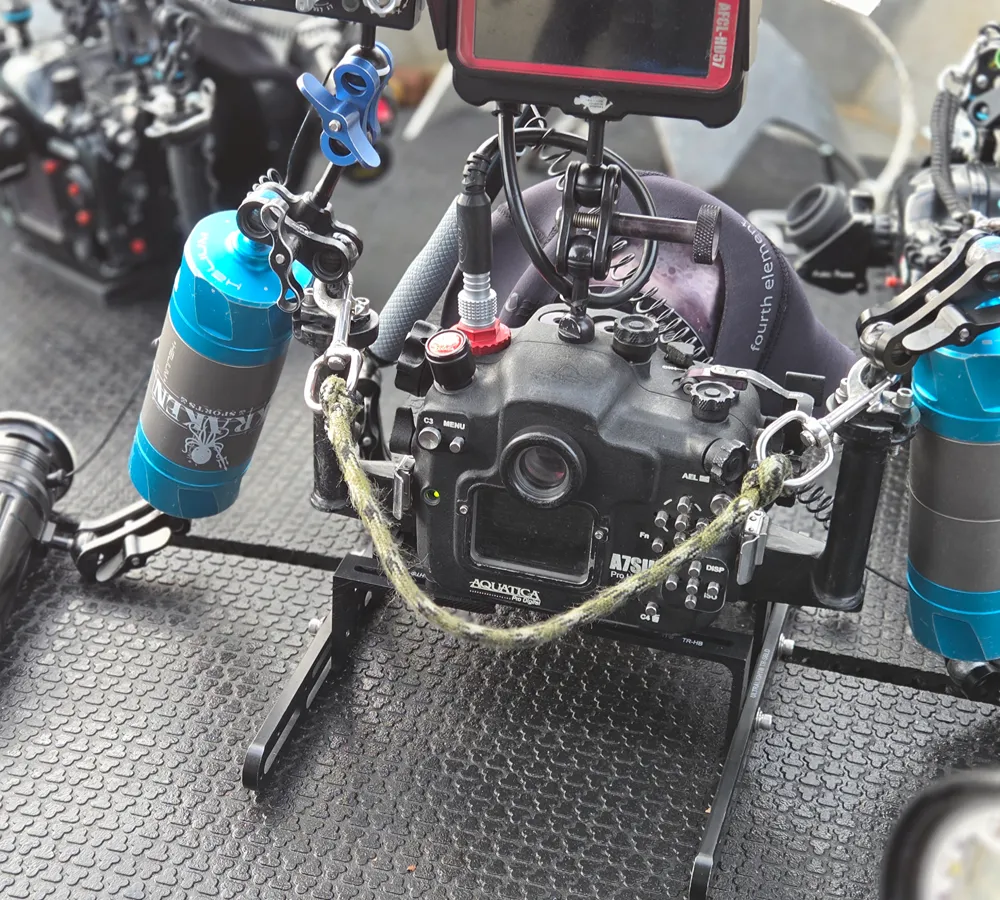
Through all of this, the housing has held up remarkably well. The aluminum body feels exceptionally strong, the controls are substantial, and the port-locking system is both secure and straightforward to operate.
A Fall at Wall Beach That Really Tested the Housing
One experience that really demonstrated the strength of the Aquatica housing happened during a shore dive at Wall Beach on Vancouver Island.
While carrying my equipment to the water, I slipped and fell, landing directly on my underwater camera housing.
With all my scuba equipment on, I weigh close to 350 pounds, so this wasn't a minor bump. A considerable amount of weight came down on the housing.
At the time, I was using Aquatica's 8-inch acrylic dome port with its protective sunshade.
The impact was hard enough that I actually broke my big toe in the fall.
Fortunately, the camera housing and the Sony A7S III inside survived without damage.
What impressed me most was how well the dome port's sunshade protected the acrylic dome. Despite the force of the impact, the dome escaped without breaking or suffering significant damage.
Obviously, this isn't the kind of durability test I'd ever recommend intentionally repeating! But it was a real-world demonstration of just how robust the housing and its port system can be.
After more than 1,000 dives, that incident remains one of the clearest examples of why I have so much confidence in Aquatica's construction.
A Secure and Practical Port-Locking System
Another feature I particularly appreciate is the port-locking mechanism. Changing between a dome port and a macro configuration is relatively simple, and once everything is properly installed, the connection feels solid and secure.
Considering the amount of handling, travel, and regular maintenance my equipment goes through, having a reliable port-locking system is extremely important.
Ergonomics and Handling Underwater
Despite its substantial size, I find the Aquatica housing comfortable to operate underwater. The Sony A7S III is a full-frame mirrorless camera, and the housing needs enough internal space to accommodate the camera body, controls, and mechanical linkages.
Aquatica has done a good job positioning the controls where they can be accessed while holding the housing. Most essential camera functions are accessible without having to reposition my hands excessively, which is important when filming moving subjects.
When you're following a giant Pacific octopus, tracking a wolf eel, or trying to capture a smooth sequence along a reef, you don't want to be fumbling around looking for camera controls.
Weight and Balancing the Camera Rig
The housing itself is substantial, and once you add a large dome port, video lights, arms, and accessories, the entire system becomes quite heavy. I've spent considerable time experimenting with different configurations to achieve comfortable buoyancy and trim.
A well-balanced camera system makes an enormous difference when filming underwater. Although I'm happy with the housing's ergonomics, getting the complete system balanced has required experimentation.
It's something prospective buyers should consider when budgeting for a professional underwater housing.
My Early Problems With Sticking Buttons at Depth
During my first few months of ownership, I experienced a frustrating problem with some of the housing's buttons sticking underwater. The issue was particularly noticeable with the ISO control.
At depth, the button would occasionally remain depressed instead of returning to its normal position. When this happened, the camera would rapidly cycle through ISO settings, sometimes to the point where the camera became unresponsive.
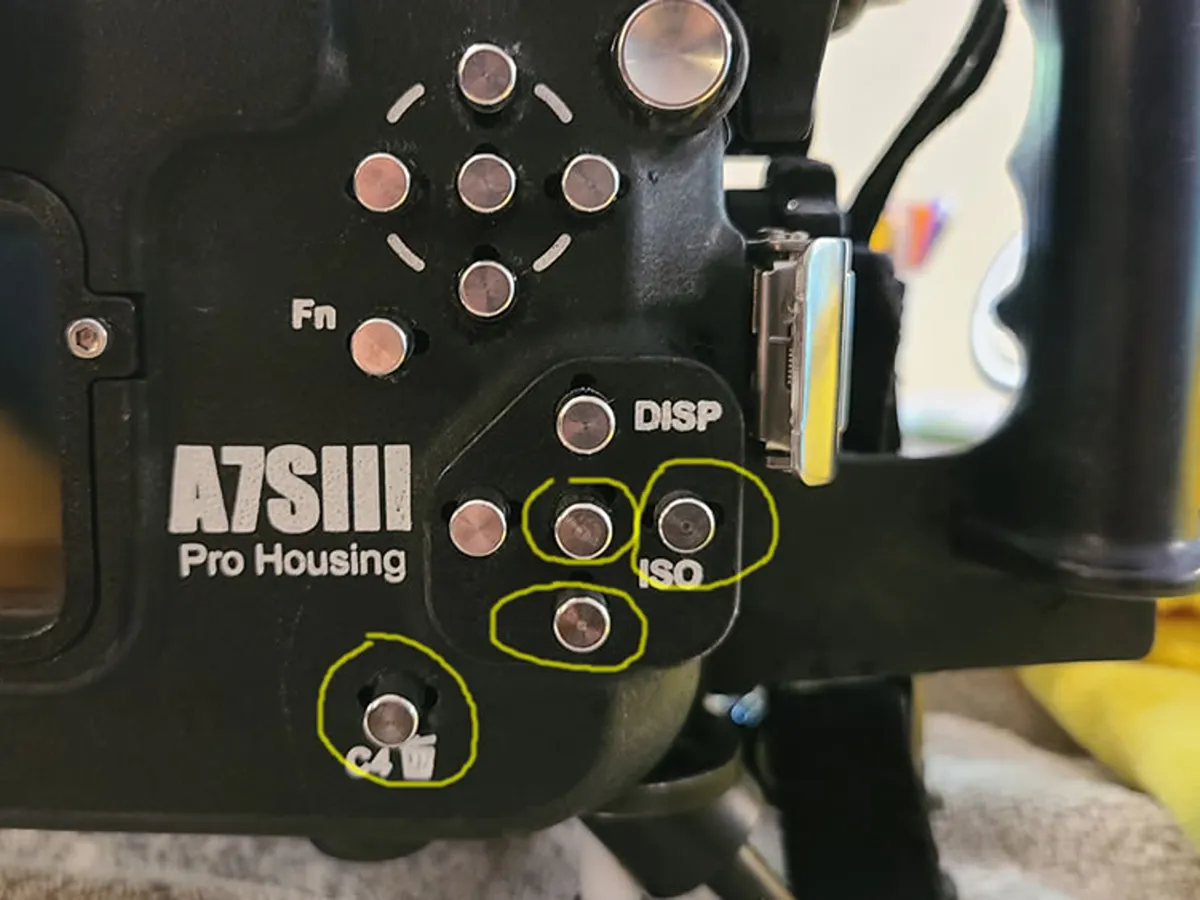
I contacted Blake, who owned Aquatica at the time, and we spent time troubleshooting the problem. Eventually, we determined that replacing the standard button springs with stronger deep-water springs might solve the issue.
Aquatica arranged to have the housing shipped overnight to its headquarters, where the problem could be investigated directly.
The stronger springs were installed, and the difference was immediate.
This demonstrated both a limitation in the original configuration and Aquatica's willingness to work directly with a customer to resolve it.
My criticism is that the housing would benefit from stronger springs as standard equipment, or at least a clearly identified option when ordering.
It would have saved considerable time and frustration during those first few months.
Surveyor Vacuum Monitoring and Moisture Detection
My Aquatica housing came equipped with the Surveyor vacuum monitoring and moisture detection system. After more than 1,000 dives, I consider it one of the most important features of the entire housing.
Before entering the water, I use the vacuum pump to establish a vacuum inside the housing and confirm that the system is maintaining its seal.
This provides additional confidence that the housing has been assembled correctly.
The One Time the Surveyor System Warned Me About a Leak
In more than 1,000 dives, I've only experienced one incident where water entered my Aquatica housing.
The cause was surprisingly simple: a single hair had found its way onto an O-ring, compromising the seal.
As I placed the housing into the water during entry, before I was even fully submerged, the Surveyor vacuum alarm activated.
I immediately removed the housing from the water and inspected it.
Thankfully, only a few droplets had entered. I was able to identify the problem, clean the O-ring, and correct the seal before any significant damage occurred.
It doesn't replace careful assembly and O-ring inspection, but having an additional warning system has given me considerable peace of mind over the years.
Battery Life and Maintenance
In my experience, the Surveyor system's battery needs replacing approximately every 50 dives.
I've noticed that when the battery becomes weak, the audible alarm may no longer function properly, even though the red warning light still flashes if the vacuum is compromised.
Occasionally, I encounter situations where the housing doesn't initially maintain vacuum after pumping it down.
When that happens, I remove the vacuum valve cover, inspect and wipe the O-ring, make a small adjustment to the Surveyor pressure valve, and repeat the vacuum test.
That has generally resolved the issue. I wouldn't consider the housing ready to dive until the vacuum test is stable and the monitoring system is functioning properly.
Preventative O-Ring Maintenance
I've made a habit of replacing the housing's O-rings approximately once per year as preventative maintenance.
Considering how frequently I dive, regular inspection and replacement of sealing components is essential.
Even a tiny piece of debris can compromise a seal, as I've learned firsthand.
The Surveyor system provides an important additional safeguard, but it doesn't eliminate the need for careful maintenance.
Long-Term Reliability After More Than 1,000 Dives
A housing can perform beautifully during a few test dives, but that doesn't necessarily tell you how it will hold up after several years of constant exposure to saltwater.
My Aquatica housing has now accompanied me on more than 1,000 dives, giving me a good understanding of the system's strengths and weaknesses.
Wear on Internal Controls and Mechanisms
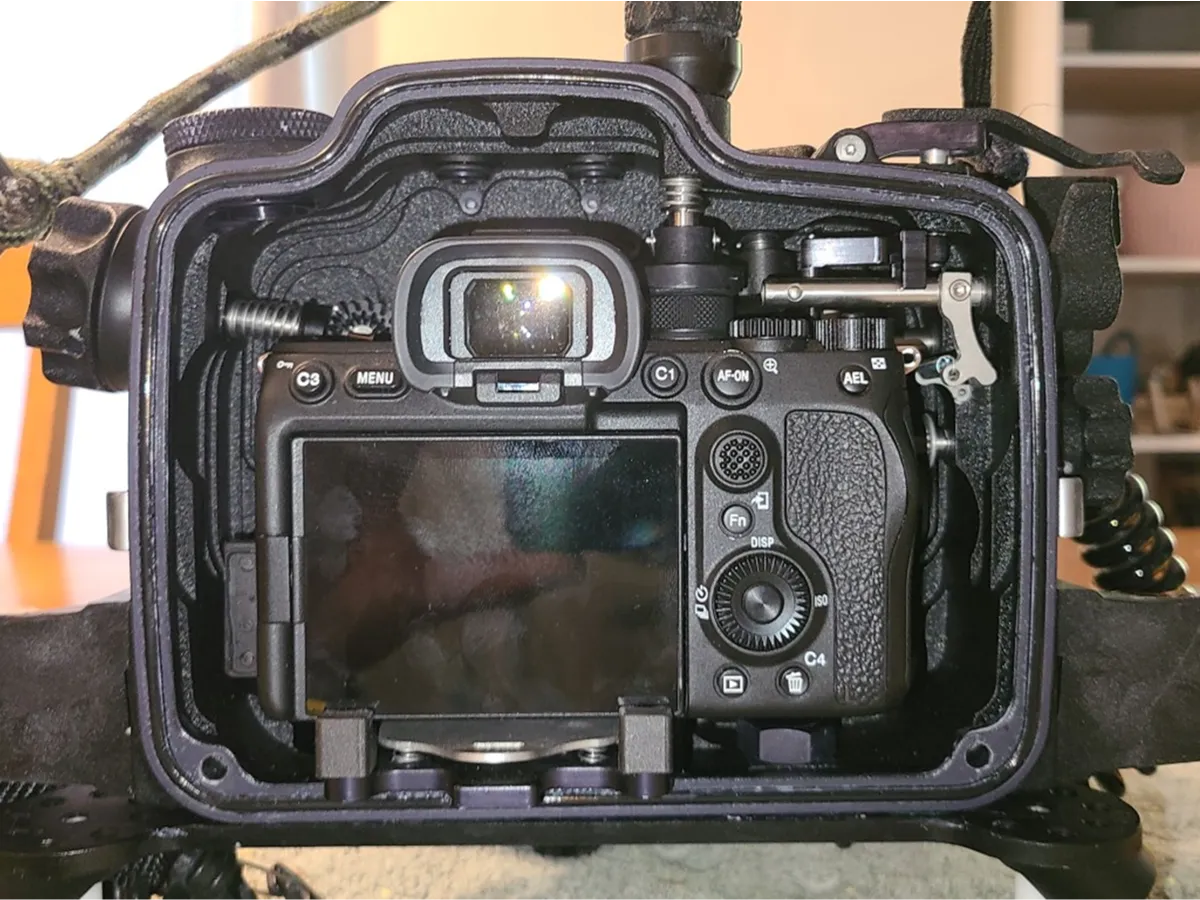
Over time, I've experienced occasional issues with some control dials becoming stiff or binding.
In a few instances, a dial would become difficult to rotate in one direction or temporarily lock up.
I've also worn down the teeth on one of the small internal gears used to operate a custom camera button.
That mechanism eventually stopped functioning correctly, and I needed replacement parts.
To be fair, I suspect much of this wear is related to the sheer amount of diving I do.
The equipment is repeatedly exposed to cold saltwater, pressure, temperature changes, and constant mechanical operation.
The Housing Has Remained Dependable
Despite these maintenance issues, the housing has continued to perform extremely well.
The aluminum body remains solid, the port-locking mechanism continues to work reliably, and the Surveyor system has been dependable.
The early sticking-button issue was resolved with stronger springs, while occasional worn or stiff controls have been manageable through maintenance and replacement parts.
For a housing that's experienced more than 1,000 cold-water dives, I consider that an excellent track record.
Aquatica Customer Service: A Major Reason I've Stayed
One of the most positive aspects of owning my Aquatica housing has been the customer support I've received over the years.
I dealt primarily with Blake, the company's previous owner, and Carolina.
Their willingness to troubleshoot problems, provide replacement parts, and accommodate my diving schedule made a lasting impression.
Replacing a Broken Handle
Only a few months after purchasing the housing, one of the handles broke. Blake and Carolina were quick to arrange a replacement without a drawn-out process.
Troubleshooting the Sticking Buttons
Aquatica paid to have the housing shipped overnight to its headquarters for diagnosis. The stronger deep-water springs were installed and solved the problem.
Fast Turnaround on a Full Service
Before a series of dive trips to Port Hardy, Aquatica returned my housing within approximately one week, fully serviced with new O-rings, springs, and other internal components addressed.
Attention to Small Details
Aquatica replaced items such as my vacuum sensor cap and the housing's sacrificial zincs during servicing, even when I hadn't requested it. Blake also sent me an Aquatica T-shirt.
Supplying Parts for Field Repairs
When I wore down the teeth on an internal gear used to operate a custom camera button, Blake sent replacement parts and additional small gears so I could perform the repair myself.
Testing a Prototype Glass Dome
When I asked about using the Laowa 10mm f/2.8 lens underwater, Blake discussed the optical challenges and sent me a prototype glass dome to evaluate.
I tested it for approximately two months before returning it and eventually purchasing the 9.25-inch MegaDome.
Aquatica's New Ownership
Most of these customer service experiences took place while Blake owned Aquatica, working alongside Carolina, who remains with the company today.
Aquatica is now under the ownership of Mathieu Roussel. I haven't yet had the same extensive service experience with the new ownership, so I can't personally compare the support.
I'm pleased that Carolina remains involved and look forward to seeing how the company develops under Mathieu's leadership.
The Aquatica 9.25-Inch Glass MegaDome
Of all the ports I've purchased for my Aquatica system, the 9.25-inch glass MegaDome has become my favourite.
I originally purchased it to accommodate the Laowa 10mm f/2.8 lens, which provides an exceptionally wide field of view.
Wide-angle underwater photography introduces optical challenges because the dome port becomes part of the lens's underwater optical system.
Port size, curvature, lens position, and extension length can all affect the final image.
The 9.25-inch MegaDome has worked extremely well for my filming requirements and has become the port I reach for most often.
I still own the 8-inch acrylic dome and the macro flat port, along with my +5 and +10 diopters and double flip holder.
These give me the flexibility to switch between wide-angle and macro filming.
But for the large marine life, kelp forests, and underwater landscapes that make up much of my work, the glass MegaDome is now my primary choice.
What I Would Change About the Aquatica Housing
Although I'm very happy with the housing overall, there are a few things I think Aquatica could improve. These are based on problems and limitations I've experienced over more than 1,000 dives.
1. Stronger Button Springs Should Be Standard
The sticking-button issue during my first few months of ownership was frustrating and occasionally prevented me from filming.
Installing stronger deep-water springs completely resolved it.
I'd like to see Aquatica consider stronger springs as standard equipment, or at least make the option more prominent for divers operating at greater depths.
2. More Mounting Options on the Bottom
The bottom of my housing has only three 1/4-20 threaded mounting holes.
For a basic configuration, that may be sufficient, but when building a large video system with lights, arms, buoyancy components, and accessories, additional mounting flexibility would be useful.
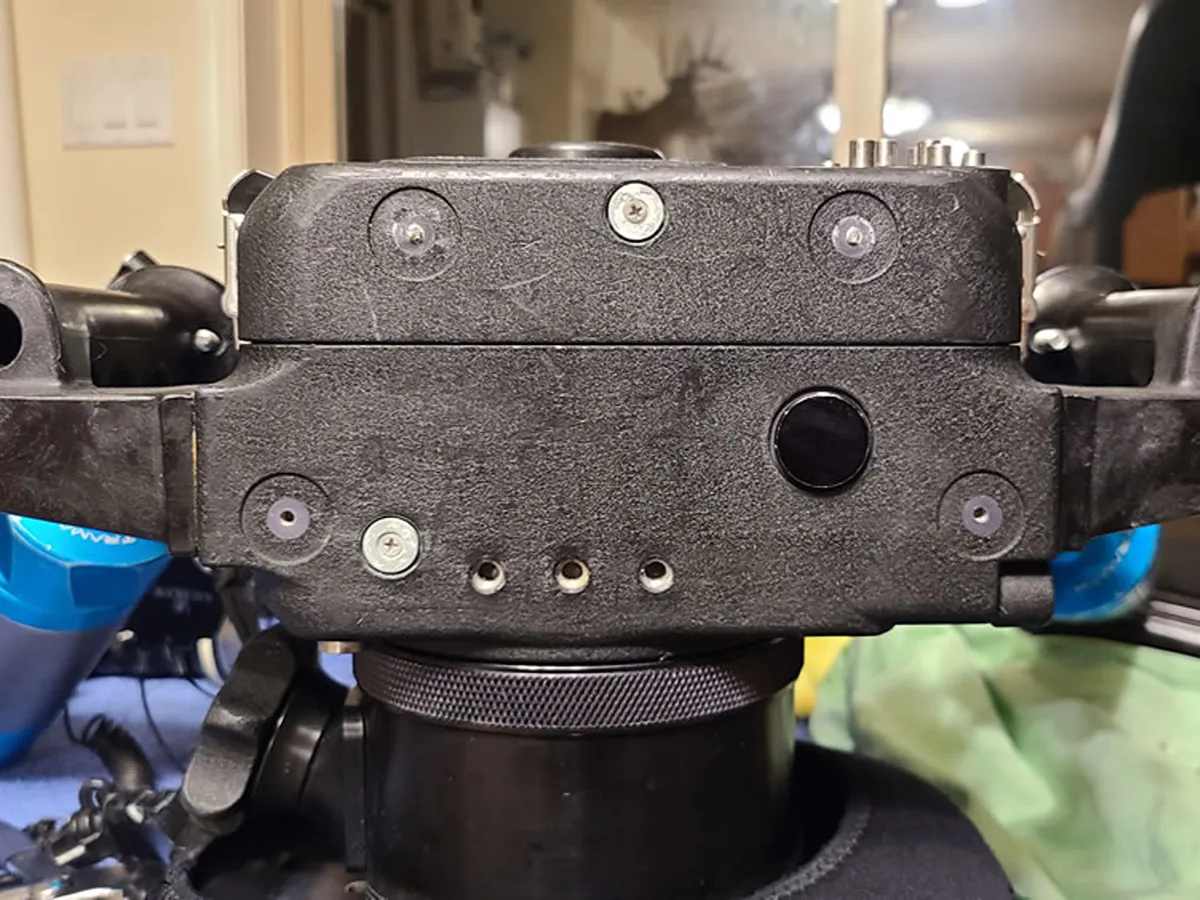
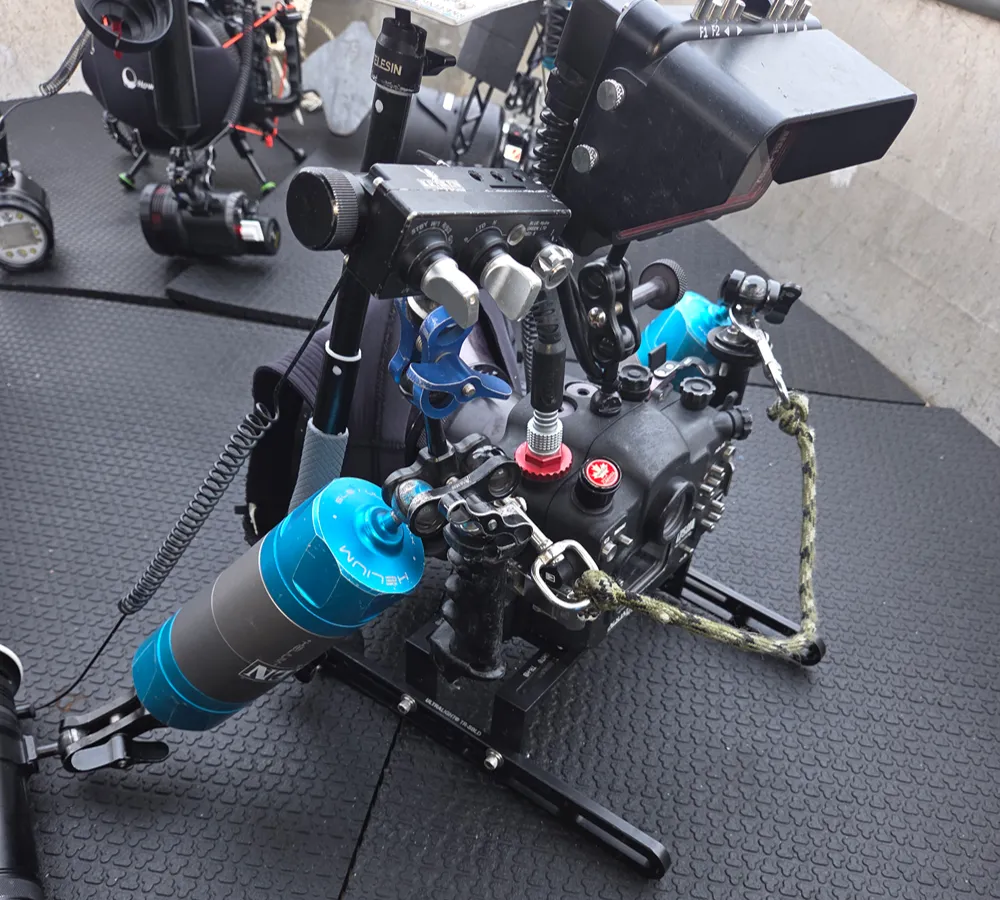
I spent considerable time experimenting with mounting arrangements before settling on the Ultralight Camera Solutions Large Camera Sled.
It's been an excellent platform for supporting the housing and the rest of my equipment.
Read my Ultralight Camera Solutions Large Camera Sled review3. Some Controls Require Maintenance After Heavy Use
I've experienced occasional binding and stiffness in control dials, along with worn internal gears after extensive use.
I don't necessarily consider this a design defect, given the number of dives I've completed.
However, easier access to replacement components and clear servicing guidance would be valuable for photographers who put this much time on their equipment.
Is the Aquatica Sony A7S III Housing Worth the Investment?
A professional underwater camera housing is a significant investment, and the housing itself is only the beginning.
Once you add ports, extensions, mounting hardware, lights, and accessories, the total cost can become substantial.
I've personally invested more than $12,000 CAD into my Aquatica system.
That's a lot of money, but I also consider how much use I've received from that investment.
I've used this housing to film giant Pacific octopuses, wolf eels, sixgill sharks, kelp forests, shipwrecks, and countless other subjects around British Columbia.
For me, the housing isn't something that sits on a shelf waiting for an occasional dive vacation.
It's essential equipment that I depend on throughout the year.
After more than four years of intensive use, it continues to do its job.
That longevity is a major part of its value.
My Next Sony Camera and Aquatica Housing
One of the advantages of investing in an established housing system is the potential to reuse accessories when upgrading camera bodies.
I've accumulated several Aquatica ports and extensions over the years, along with a collection of Sony lenses.
I'd like to retain as much of that investment as possible.
The Sony FX5 is the next camera I'm considering, and if Aquatica releases a compatible housing, it's a combination I would seriously consider purchasing.
I'd need to confirm compatibility with my existing ports, extensions, and lenses before upgrading, but ideally I'd like to continue using the Aquatica ecosystem.
Would I Buy Another Aquatica Housing?
After more than 1,000 dives, my Aquatica Sony A7S III housing has proven itself to be an exceptionally durable and capable piece of underwater filmmaking equipment.
It hasn't been completely trouble-free. The sticking buttons during my first few months of ownership were frustrating, and I've dealt with occasional worn controls, maintenance issues, and limitations with accessory mounting.
But those experiences have also given me an appreciation for how serviceable the housing is and how important good manufacturer support can be.
Aquatica worked with me to resolve the early button problems, provided replacement parts, and accommodated tight turnaround times when my filming schedule depended on having the housing back.
Most importantly, the housing has survived more than four years of intensive use in cold saltwater, on rocky shore dives, and aboard dive boats operating in demanding conditions.
It's even survived a serious fall at Wall Beach, where I landed on the housing with nearly 350 pounds of myself and scuba equipment. I came away with a broken big toe, but the housing, dome port, and camera survived without significant damage.
The Surveyor vacuum monitoring system has been dependable, the port-locking mechanism remains solid, and the housing itself has held up remarkably well.
Even setting aside my investment in the Aquatica ecosystem, the housing has earned my confidence through years of actual use. I wouldn't hesitate to purchase another.
Reviewed by ScubaBC
Based on more than 1,000 cold-water dives with an Aquatica Sony A7S III underwater housing purchased in 2022. My reviews reflect my own hands-on experiences using equipment while diving and filming around Vancouver Island, British Columbia.
This housing and the associated equipment were purchased by me. Historical customer service experiences and prototype testing opportunities are disclosed in the article. All opinions are my own.
Learn more about ScubaBC and my underwater filmmaking