2 Hour Kelp Forest Ambient Video in 4K (Underwater Ocean Experience)
Filmed in Browning Passage, Northern Vancouver Island
Just below the surface, the ocean feels alive in a completely different way.
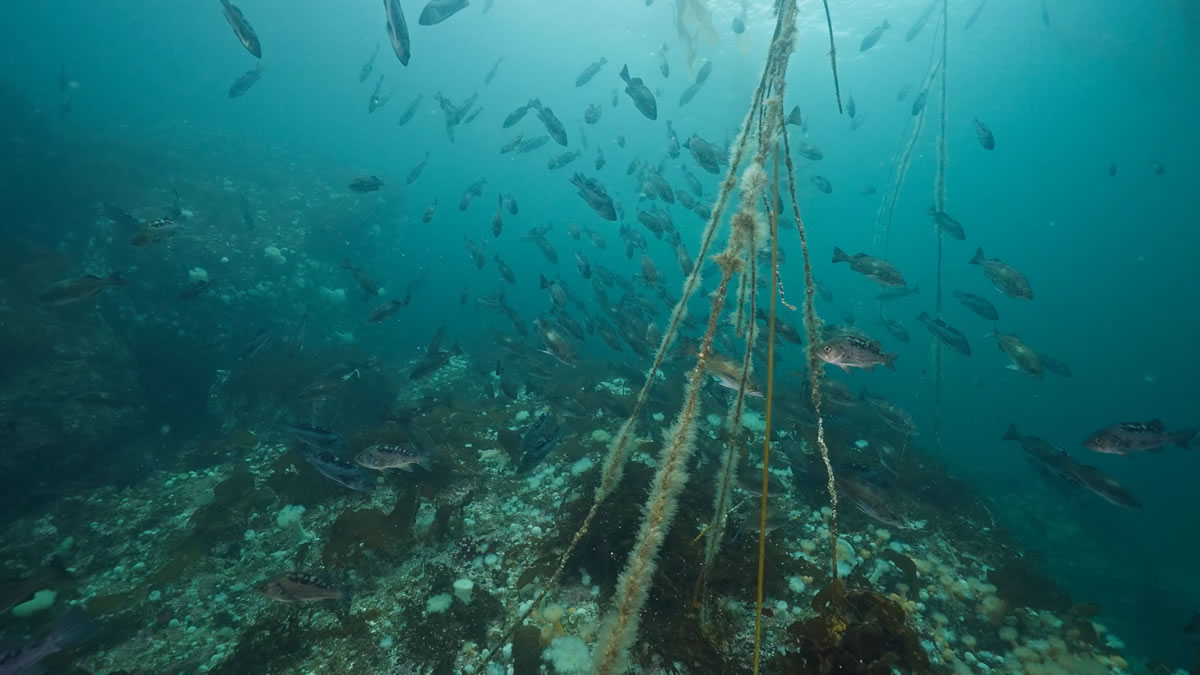
Sunlight filters down through towering strands of bull kelp. Schools of rockfish hover quietly in the water column. Jellyfish drift past in slow motion. Everything moves, but nothing feels rushed.
This 2-hour 4K underwater ambient film captures that experience inside the kelp forests of Browning Passage, off Northern Vancouver Island. Filmed over dozens of dives in cold, nutrient-rich Pacific waters, it’s designed to be watched at your own pace, whether you’re looking to relax, focus, or simply explore a place very few people ever get to see.
Watch a 2-hour underwater journey through dense kelp forests, drifting schools of rockfish, and sunlit ocean canopies.
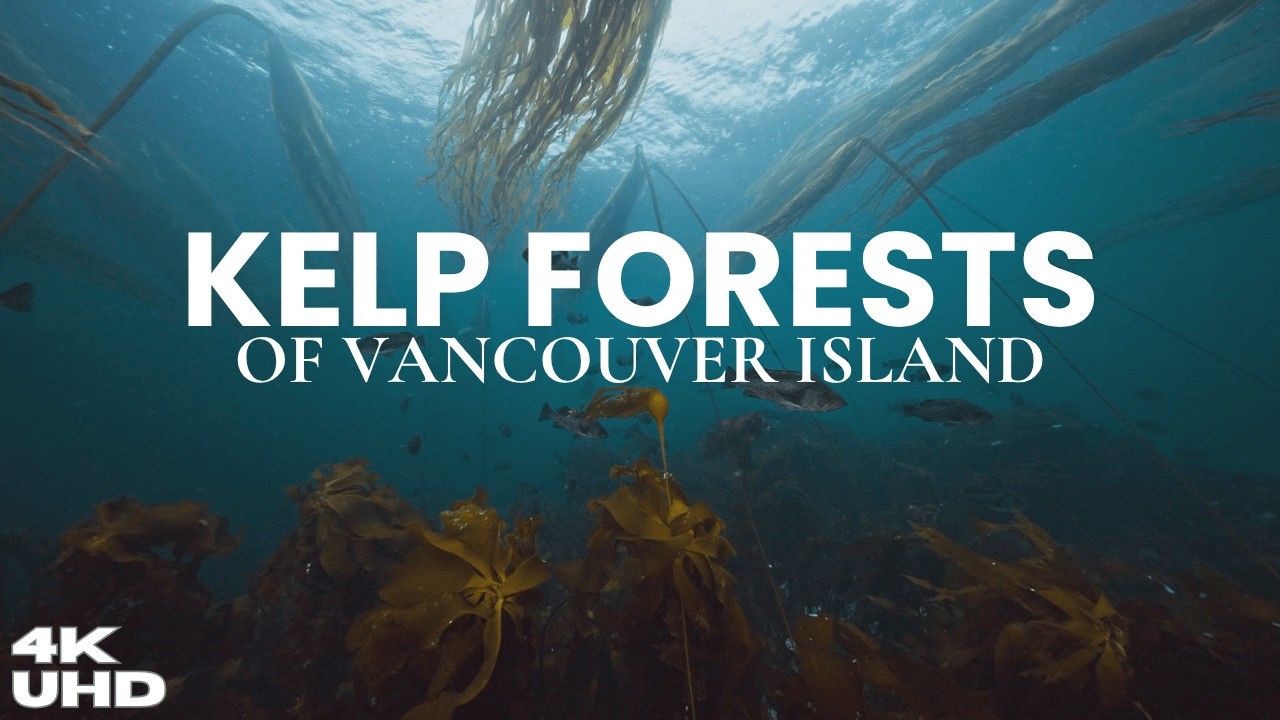
Light, relaxing music accompanies the natural underwater scenes. No narration, just the movement of the ocean.
Highlight Moments From The Video
Jump to some of the most memorable moments in the film:
- 02:30 – Entering the kelp forest
- 06:27 – Rising into the kelp canopy with rockfish overhead
- 10:35 – Moving through a dense kelp forest section
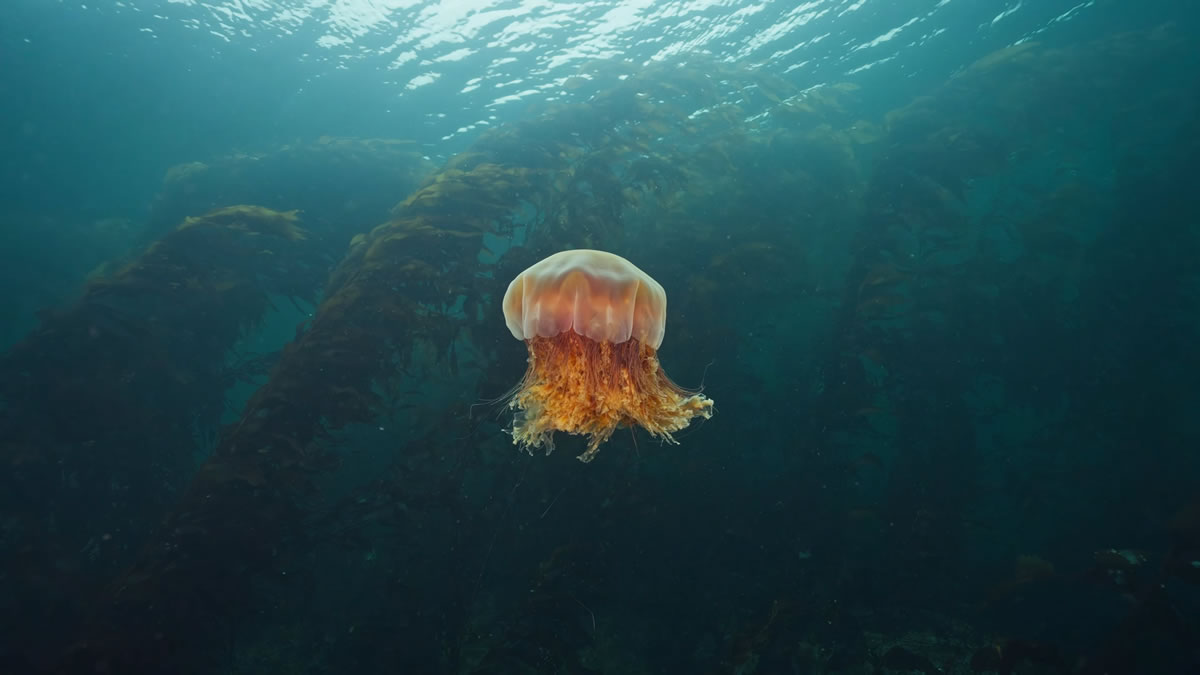
- 21:01 – Lion’s mane jellyfish drifting along the kelp edge
- 25:44 – Nudibranchs swaying as rain hits the surface
- 30:10 – Dense bull kelp “jungle” with sunrays above
- 37:00 – Moon jellyfish drifting through the kelp
- 42:41 – Ultra-wide swim along kelp fronds
- 52:41 – Reef covered in anemones and swaying kelp
- 1:10:55 – Shiner perch moving through the kelp
- 1:24:35 – Wide kelp forest drift (featured shot)
- 1:47:32 – Sunlight streaming through the kelp forest
What You’re Seeing Beneath the Surface
The footage in this film was captured across more than 80 dives, over nine separate trips to Port Hardy during peak kelp season in September and October.
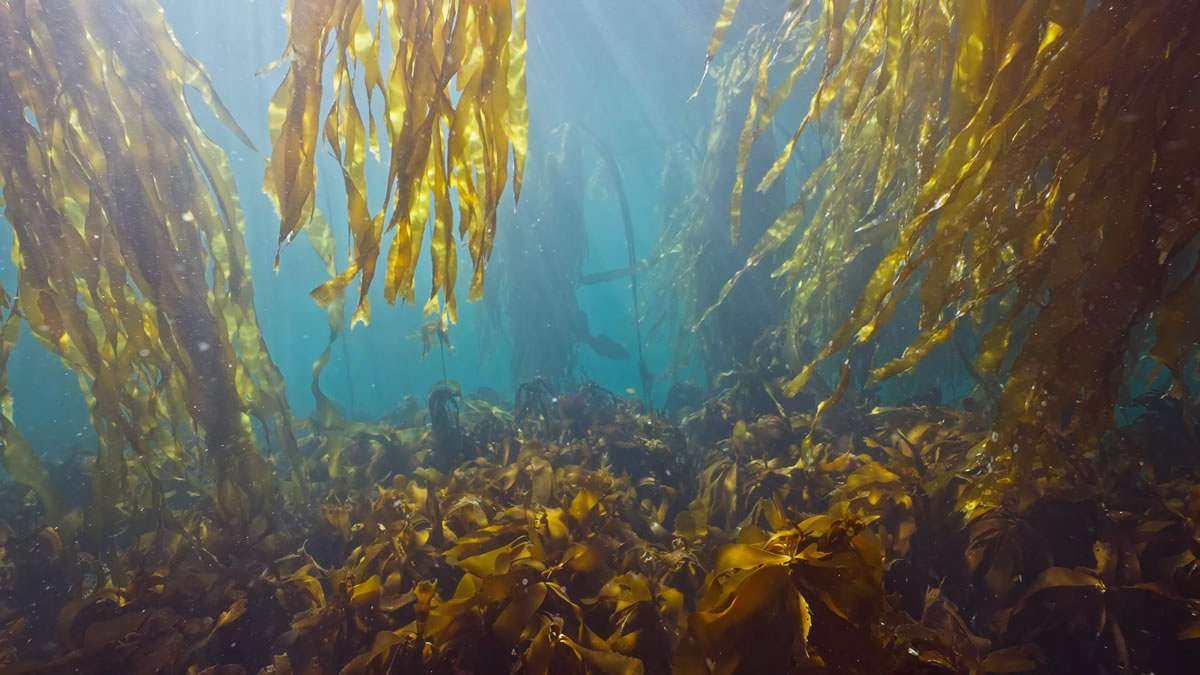
Browning Passage is a narrow channel between Nigei Island and Balaklava Island, where strong tidal exchanges push nutrient-rich water through the area. That constant flow fuels dense marine life and allows the kelp forests here to grow thick, tall, and full of movement.
Within the forest, you’ll see:
-
- Schools of black rockfish suspended in the kelp
- Lion’s mane and moon jellyfish drifting through open water
- Hooded nudibranchs attached to swaying kelp fronds
- Shallow reefs covered in palm kelp and invertebrate life
The kelp itself acts as both structure and shelter, creating a constantly shifting environment that feels closer to a living landscape than an empty ocean.
Filming in Browning Passage
Filming in this environment is not simple.
These are cold-water dives, typically between 7–8°C, requiring dry suits and heavy gear. With full dive equipment and camera setup, the total weight comes in around 120 pounds.
Every dive is done by boat, often in areas with strong currents. Conditions can change quickly, and safe diving here requires experience and comfort in moving water.
The best footage comes on the rare days when everything lines up:
-
- Calm seas
- Clear water
- Strong sunlight penetrating the surface
Out of more than 80 dives, only a handful offered those ideal conditions. Some of the most unique shots, like rain visibly striking the ocean surface from below, only happened once.
Underwater Camera & Technical Setup
Filming underwater in our cold-water environment is incredibly challenging. It took hundreds of dives to feel comfortable with the camera underwater. This film was captured using:
-
- Sony A7S III
- Sony 16–35mm f/4 lens
- Laowa 10mm f/2.8 wide-angle lens
- 9.25” glass dome port
- Aquatica underwater housing
- 3 × 15,000 lumen Kraken video lights (used sparingly)
Most scenes rely primarily on natural ambient light, especially in the shallow sections of the kelp forest, typically under 40 feet. Some deeper sequences begin around 70 feet before gradually rising into the kelp canopy.
Visibility is at its best in early fall, when cooler temperatures reduce algae and particulate in the water.
How to Watch This Video
This isn’t a fast-paced nature film.
It’s meant to be experienced passively, in the background, or in moments where you want to slow things down.
People tend to use this type of video for:
-
- Relaxation or stress relief
- Background ambiance while working or reading
- Sleep or winding down at night
- Simply exploring underwater environments
There’s no narration guiding you, just movement, light, and the natural rhythm of the ocean.
Video Chapters (Jump to Scene)
- 00:00 – Overhead view of Browning Passage
- 00:16 – Sunrays over eelgrass in the shallow reef at Rock of Life
- 02:30 – First slow drift into the kelp forest
- 04:25 – Sunlight filtering through towering bull kelp
- 05:06 – Close-up of sunlit bull kelp fronds
- 05:21 – Black rockfish moving through the kelp
- 06:27 – Rising into the kelp canopy with rockfish overhead
- 08:43 – Tall bull kelp with shifting light rays
- 10:35 – Moving through a dense kelp forest section
- 13:38 – Surface-level view along drifting kelp fronds
- 15:12 – Rockfish suspended in the kelp at Seven Tree Island
- 16:58 – Passing through palm kelp at Seven Tree Island
- 19:21 – Slow swim through thick kelp growth
- 21:01 – Lion’s mane jellyfish drifting along the kelp edge
- 23:39 – Ascending into a school of rockfish near bull kelp
- 25:44 – Hooded nudibranchs swaying as rain hits the surface
- 28:04 – Kelp fronds stretched and flowing in the current
- 30:10 – Dense bull kelp “jungle” with sunrays above
- 33:52 – Edge of the kelp forest at Rock of Life with rockfish
- 37:00 – Moon jellyfish drifting through the kelp
- 39:03 – Backward drift over palm kelp with the current
- 40:31 – Shallow reef covered in kelp
- 41:36 – Sunbeams cutting through the water column
- 42:41 – Ultra-wide swim along kelp fronds
- 43:25 – Dense school of rockfish moving through the forest
- 44:09 – Hooded nudibranchs on palm kelp
- 45:30 – Drifting beneath bull kelp in the rain
- 47:07 – Close-up of hooded nudibranch on bull kelp
- 47:49 – Lion’s mane jellyfish passing through kelp
- 52:41 – Reef with white plumose anemones and swaying kelp
- 55:51 – Ascending the wall into kelp at Seven Tree Island
- 57:12 – Slow pan along a single bull kelp stalk
- 1:01:46 – Rockfish gathered at the kelp forest edge
- 1:04:34 – Wide view of bull kelp and palm kelp in current
- 1:07:11 – Entering a dense cluster of bull kelp
- 1:08:02 – Tall kelp drift with nudibranchs and surface rain
- 1:09:21 – A single hooded nudibranch swimming freely
- 1:10:55 – Shiner perch moving through the kelp
- 1:11:39 – Large lion’s mane jellyfish drifting through
- 1:12:06 – Cluster of hooded nudibranchs on kelp
- 1:14:11 – Slow pass along the kelp forest edge
- 1:16:45 – Shiner perch and nudibranchs on shallow reef
- 1:20:43 – Black rockfish suspended in the kelp
- 1:24:35 – Ultra-wide drift at Seven Tree Island (thumbnail shot)
- 1:27:59 – Palm kelp in foreground with bull kelp beyond
- 1:29:14 – Edge of palm kelp forest at Seven Tree Island
- 1:30:25 – Shallow swim through bull kelp with rainfall above
- 1:31:31 – Mixed rockfish school near the kelp
- 1:33:14 – Juvenile yellowtail rockfish among kelp
- 1:36:57 – Lion’s mane jellyfish in giant kelp
- 1:40:27 – Deeper pass through the kelp forest
- 1:43:47 – Surface ripples visible above the kelp canopy
- 1:47:32 – Sunlight streaming through the forest
- 1:49:09 – Surreal lighting in a bright kelp section
- 1:52:10 – Towering kelp with dancing sunrays
- 1:55:51 – Rising into kelp with surface texture above
- 1:57:42 – Looking up at flowing bull kelp strands
- 1:59:20 – Swimming within dense palm kelp
Explore More Underwater Films
Explore more long-form underwater ambient videos:
-
- Browning Passage Ambient Film
- Salish Sea Ambient Film
- 2 Hour Octopus Compilation 2024
- 2 Hour Octopus Compilation 2025
- Broughton Archipelago Film
The kelp forests of Northern Vancouver Island are one of the most active and dynamic marine environments on the coast, but they’re also one of the least seen.
This film is a small window into that world.