Kelp Forest in Browning Passage (Underwater Film)
Featuring underwater footage from Northern Vancouver Island’s bull kelp forests.
Kelp forests in Browning Passage create a completely different underwater environment compared to the surrounding reef systems.
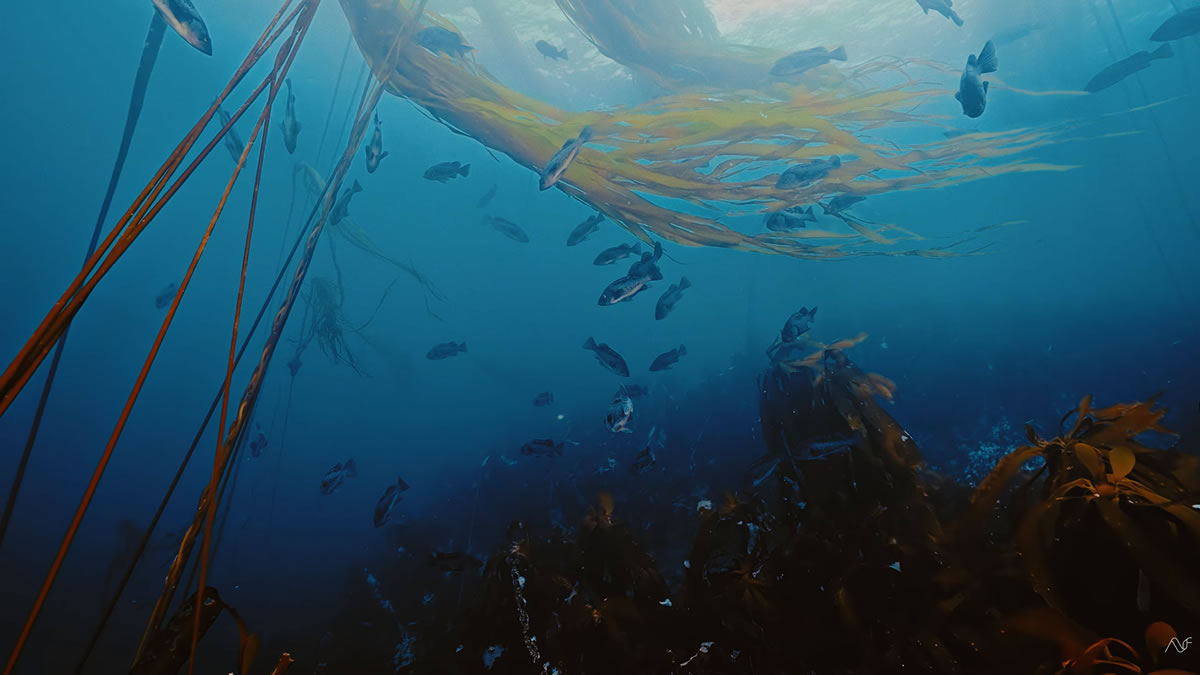
Towering bull kelp, moving with the current and reaching toward the surface, forms dense vertical structure that filters light and creates constantly shifting patterns below.
This episode of the Ambient Film series, produced by Ambient Film and now streaming on PBS, features underwater footage captured across more than 80 dives in Browning Passage, focusing on the movement, light, and atmosphere within these kelp forests.
A slow, continuous view through the kelp forests of Browning Passage, where light, current, and marine life combine into a constantly shifting underwater environment.

Highlight Moments From The Film
- 00:40 – Looking up into the towering bull kelp
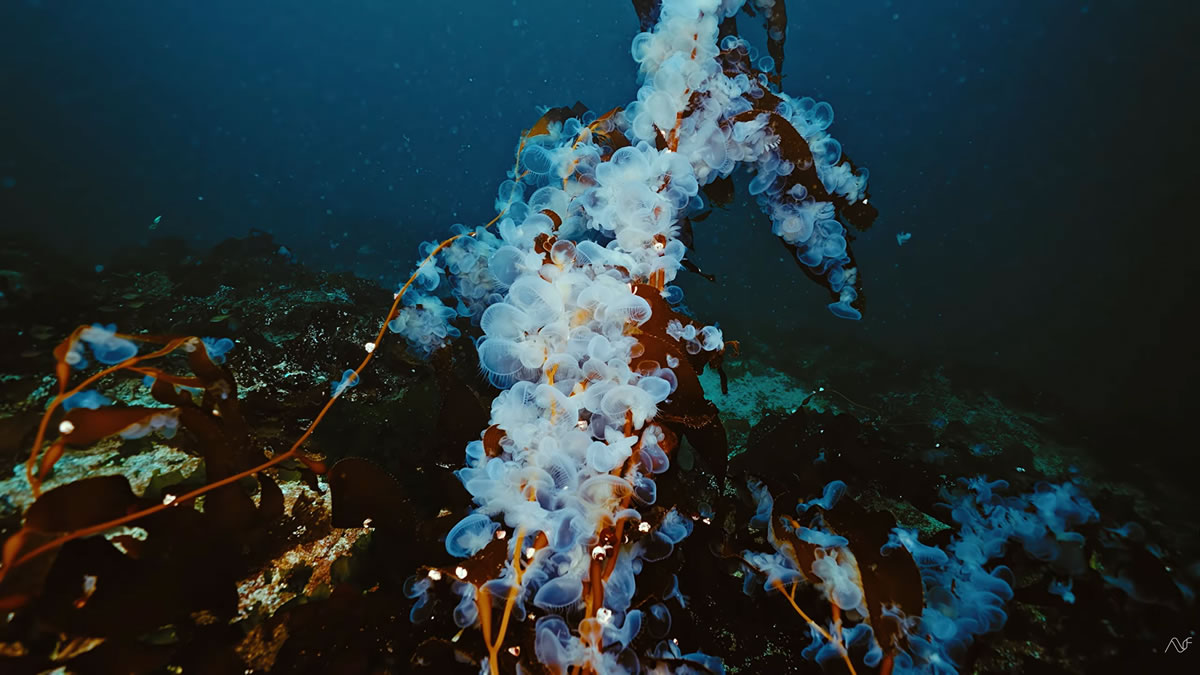
- 04:25 – Hooded nudibranchs clinging to bull kelp fronds
- 07:14 – Kelp swaying in the current at Rock of Life
- 11:03 – Palm kelp swaying in the current at 7 Tree Island
- 12:30 – Sea lion swimming past the edge of the kelp forest
- 17:10 – Schools of rockfish moving through the kelp overhead
- 19:20 – A solitary hooded nudibranch drifting in the current
- 21:20 – Black rockfish in the kelp at Rock of Life
- 24:01 – Lion’s mane jellyfish drifting through the kelp
- 28:19 – Dense cluster of hooded nudibranchs on giant kelp
- 32:03 – School of shiner perch in the giant kelp
- 33:59 – Looking up into the stretched out bull kelp at 7 Tree Island
- 37:01 – Swimming up into a school of rockfish amongst the kelp
- 40:45 – Panning along bull kelp fronds in light current
- 44:50 – Sunrays dancing through the kelp forest
- 50:42 – The kelp forest at Rock of Life
- 53:39 – A dense section of kelp forest with beams of light shining through
These moments highlight the movement, light, and marine life within the kelp forests of Browning Passage, from drifting jellyfish and schools of fish to sunrays filtering through dense kelp canopies.
Featured on PBS
This episode is part of the Ambient Film series and is currently streaming on PBS.
Dive Sites Featured in This Film
This film focuses on kelp forest environments across several sites in Browning Passage:
-
- Hardy Bay - Shallow areas where giant kelp forests form near the shoreline and extend into deeper water.
- Bear Cove - Protected areas with dense kelp growth and calmer conditions.
- 7 Tree Island - A mix of reef and kelp structure, often holding fish within the kelp canopy.
- Rock of Life (Buttertart) - A more exposed site where current influences both kelp movement and marine life activity.
Each location offers a slightly different look at how kelp forests develop depending on depth, exposure, and current.
Life Within the Kelp Forest
Kelp forests provide structure, protection, and feeding opportunities for a wide range of marine life.
Throughout the film, you’ll see:
-
- Bull kelp and palm kelp forming dense underwater canopies
- Hooded nudibranchs attached to kelp fronds
- Rockfish moving through the kelp columns
- Jellyfish drifting through open sections of the forest
- Various invertebrates and small fish using the kelp for shelter
The movement of the kelp itself becomes part of the environment, shaping how light and marine life interact within the water column.
Filming in the Kelp Forest
This footage was captured during September and October, when the kelp has had the full growing season to reach its peak density.
Conditions during filming were unusually favorable:
-
- Calm seas
- Excellent visibility
- Strong natural light filtering through the surface
Capturing these scenes required long periods spent swimming within the kelp, often waiting for the right combination of light, current, and movement.
Many of the sequences focus on sunlight passing through the kelp canopy, creating shifting patterns and beams that change moment to moment.
Film Credits
Produced by Ambient Film
https://ambientfilm.org/
Underwater footage by Carl Sorensen (ScubaBC)
Music by Natural States
Kelp forests are constantly in motion, shaped by current, weather, and seasonal growth.
This film captures them at their peak, offering a continuous look at how light and movement define one of the most dynamic underwater environments along the coast of Vancouver Island.
Explore More from the Ambient Film Series
This episode is part of the Ambient Film series, which includes several films featuring my underwater footage from Vancouver Island.
Each episode focuses on a different underwater environment, from shipwrecks and reef walls to kelp forests shaped by strong coastal currents.
More ScubaBC Ambient Videos
If you want to explore similar environments in longer, uninterrupted form, you can watch the full ambient films here:
These films expand on the same locations and marine environments, presented as long-form, no-narration experiences designed for slower viewing, background ambience, or simply spending more time underwater.